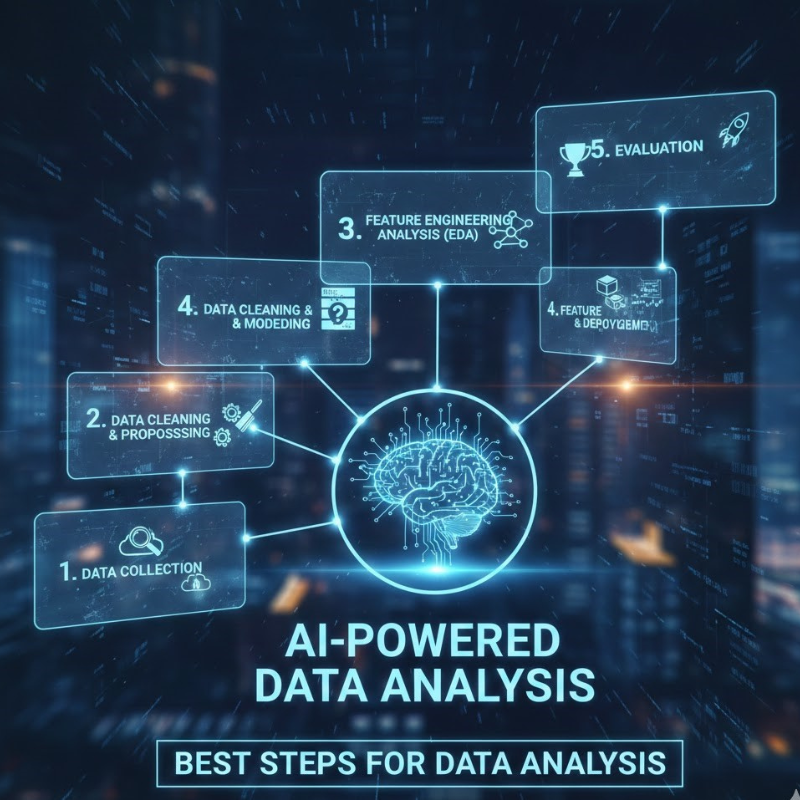
INITIALIZING AI...

AI-Driven Intelligence Meets BI Analytics & ERP Control for Superior Decision-Making

AI, BI & ERP Fusion: Smarter Integration, Stronger Business

ERP implementation is a major step that can transform any business — but its real power comes to life when combined with AI intelligence and BI insights.

With AI predicting needs, BI guiding decisions, and ERP streamlining operations, the integration becomes faster, smarter, and far more effective.

This concise guide highlights how these three technologies work together to ensure a smooth, strategic, and future-ready ERP journey.

Embracing the Fundamentals of Data Analysis

Defining Data Analysis

Data analysis is more than just crunching numbers; it’s the art of transforming raw data into valuable insights. It involves cleaning, processing, and interpreting data to uncover trends, patterns, and correlations.

Importance of Data Quality

Before diving into analysis, ensure your data is of high quality. Garbage in, garbage out – the accuracy of your insights hinges on the quality of the data you feed into your analysis tools.
Right Data Analysis Tools

Choosing the appropriate tools is crucial. Whether it’s Excel for basic analysis or Python and R for advanced analytics, the right tool depends on the complexity of your data and the depth of analysis required.


AIDA Copywriting Formula in Data Analysis

Understanding the AIDA formula— Attention, Interest, Desire, Action— is crucial in presenting your data analysis findings effectively.

  • Crafting Attention-Grabbing Visualizations

    Capture attention with compelling visualizations. Whether it’s a striking chart or an interactive dashboard, visuals speak louder than raw data.

  • Creating Narratives for Interest and Desire

    Translate your findings into a narrative that piques interest and creates a desire for deeper understanding. Tell a story that resonates with your audience, making the data relatable and actionable.

  • Call to Action in Data Analysis

    Every analysis should lead to action. Clearly articulate the actionable insights derived from your analysis and guide stakeholders on the next steps

DIGITAL MARKETING

Frequently Asked Questions
(FAQs)

Hypothesis testing is fundamental in data analysis. It helps validate assumptions and ensures that the patterns observed are statistically significant, providing a solid foundation for decision-making.

Predictive analytics uses historical data and machine learning algorithms to forecast future trends. Businesses can use these insights for strategic planning, anticipating market changes and staying ahead of the competition.

Absolutely. Data visualization simplifies complex information, making it easier to understand. Visualizations enhance communication and facilitate quicker decision-making.

Ethics in data analysis is paramount. Ensuring data privacy, transparency, and unbiased analysis are essential to maintain trust and integrity in the process.

Continuous learning is key. Engage with online communities, attend conferences, and follow industry experts to stay abreast of the latest trends and advancements in data analysis.

Conclusion

2026 Digital Conclusion: Success demands a dynamic, AI-powered strategy. Prioritize hyper-personalization, video dominance, advanced conversational AI, seamless social commerce, and sharp AIDA copywriting. Integrate these trends to thrive, not just survive.